

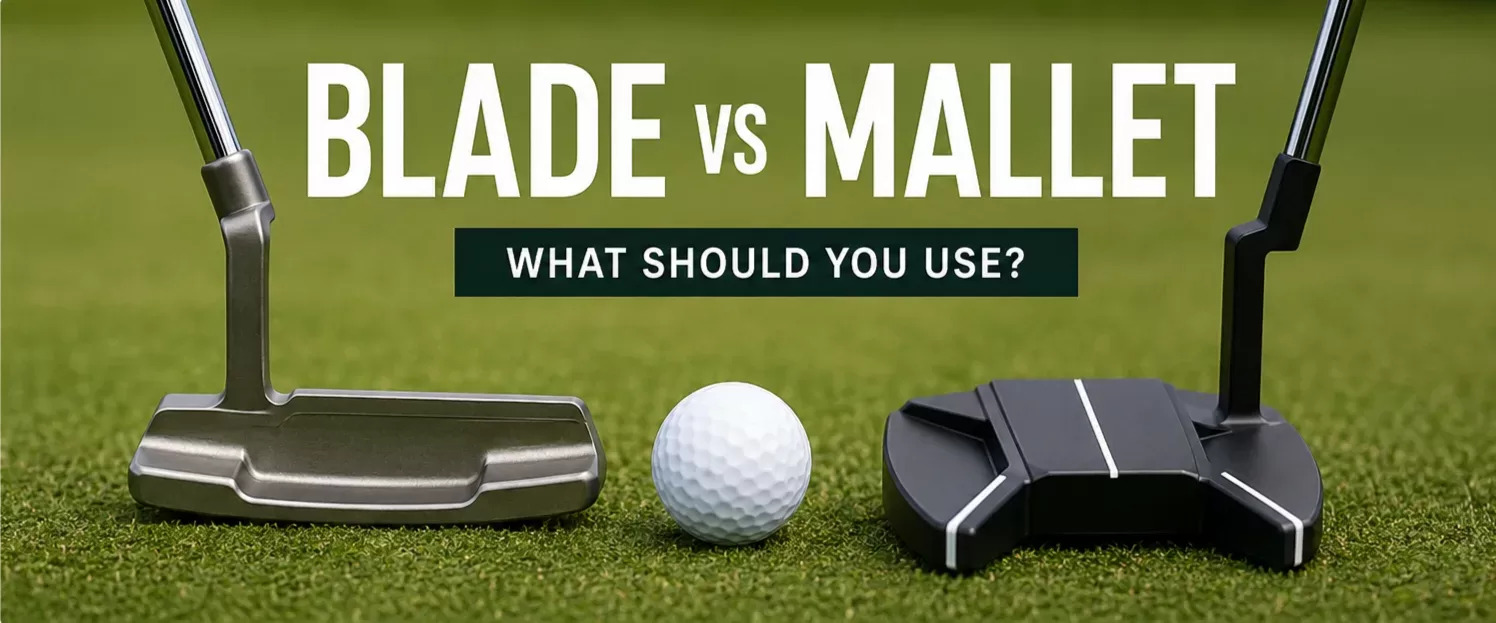
Blade vs Mallet Putter: What Should I Use?
Choosing between a blade and a mallet putter is not about which one looks better in the bag.
It comes down to aim, strike, stroke shape, distance control and confidence. Some golfers putt better with a clean blade. Others need the stability and alignment help of a mallet. Neither is automatically better.
The best putter is the one that helps you start the ball on line and control pace more often.
What Is a Blade Putter?
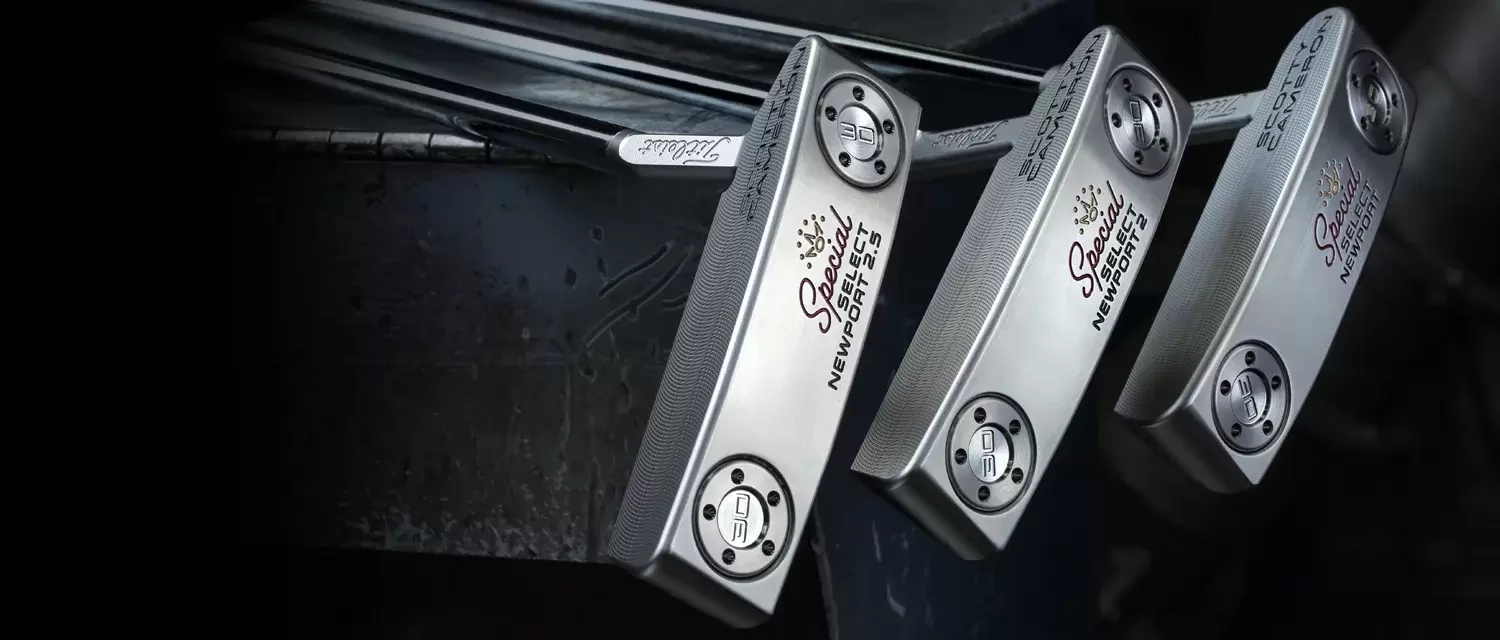
A blade putter is the more traditional shape. It usually has a slimmer head, less visual bulk behind the ball and a cleaner look at address.
Classic examples include the Scotty Cameron Newport 2, PING PLD Milled Anser, Bettinardi BB Series models and Odyssey blade-style putters.
Blade putters tend to suit golfers who like feel, feedback and a simple look behind the ball. They can be excellent if you strike your putts consistently and prefer to release the face naturally through impact.
The trade-off is forgiveness. If you regularly miss the centre of the face, a smaller blade head may punish you more than a larger mallet.
What Is a Mallet Putter?
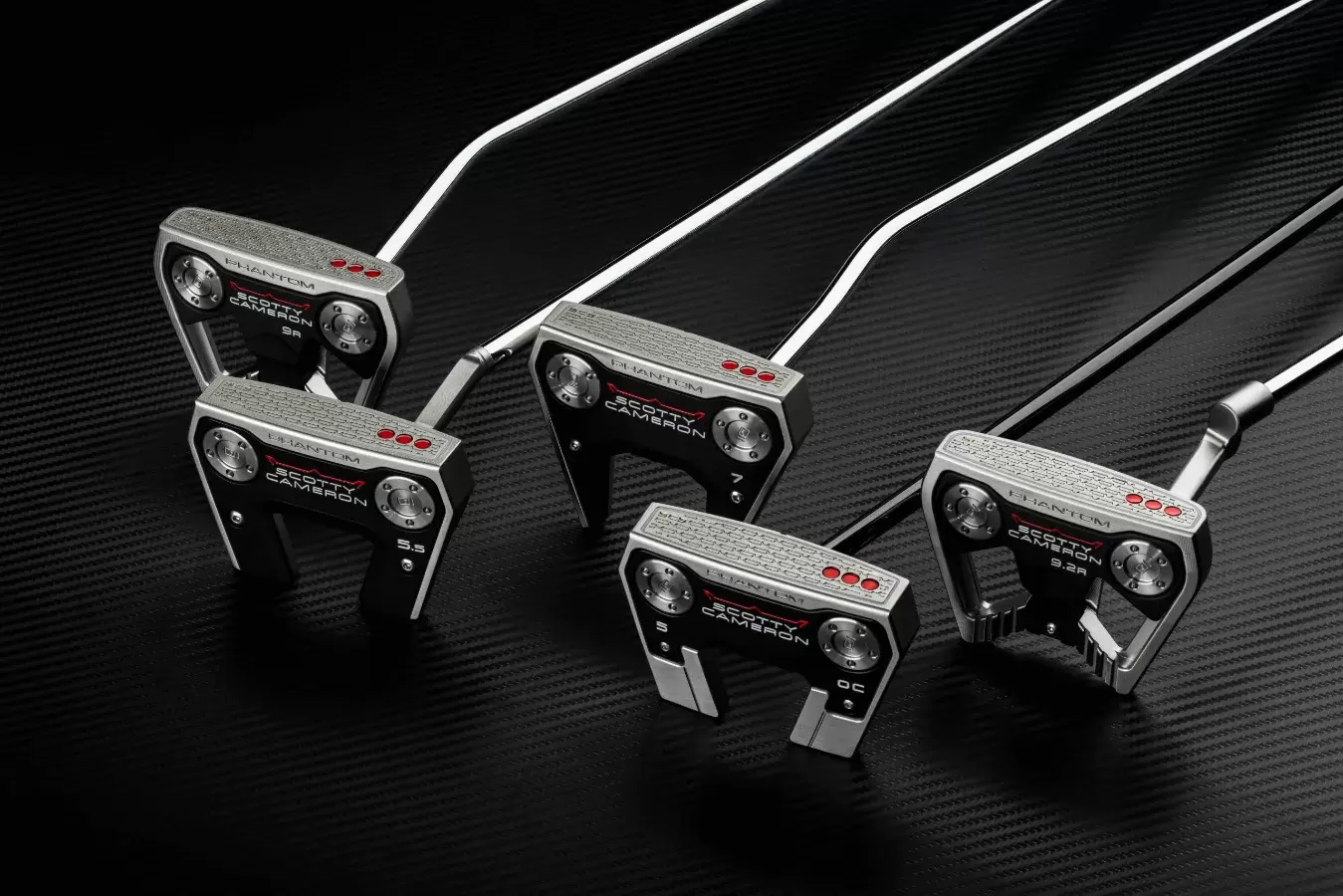
A mallet putter has a larger head shape. Some are compact and rounded. Others are wide, square, fang-shaped or almost futuristic.
Good examples include the TaylorMade Spider Tour X, Odyssey Ai-ONE Jailbird Mini, Odyssey #7, Scotty Cameron Phantom, PING Tyne and L.A.B. Golf DF3.
Mallets usually offer more stability and more room for alignment aids. That is why a lot of golfers find them easier to aim, especially on short putts.
They can also be more forgiving when strike is slightly heel or toe side. If your current putter twists at impact or looks hard to aim, a mallet is worth testing.
The Simple Difference
A blade is usually better for golfers who want:
A clean, traditional look
More feel from the face
Less visual bulk
A natural arc stroke
Clear feedback on mishits
Better pace control by feel
A mallet is usually better for golfers who want:
More stability
More forgiveness on off-centre strikes
Stronger alignment lines
A larger shape behind the ball
More help on short putts
A face-balanced or lower-torque feel
That is the simple version. The proper answer depends on the golfer.
Stroke Type Matters
Your putting stroke is one of the biggest clues.
Some golfers have a strong arc. The putter opens slightly on the way back and closes through impact. Those players often suit a putter with more toe hang, which is common in blades and some slant-neck mallets.
Other golfers have less arc. The face stays more square to the target line for longer. Those players often suit face-balanced mallets or double-bend designs.
This is why “blade vs mallet” is slightly too simple. Neck style matters as much as head shape.
A plumber’s neck blade, a flow-neck blade, a short-slant mallet and a double-bend mallet will all behave differently.
Why So Many Pros Use Mallets Now
Mallet putters used to have a bit of a reputation. Some golfers saw them as bulky, ugly or only for players who struggled to putt.
That has changed.
Modern mallets are everywhere on tour because they offer stability without feeling like a cheap training aid. The TaylorMade Spider range is the obvious example. It gives players a stable head, strong alignment and different neck options depending on stroke shape.
Scottie Scheffler has had major success with a TaylorMade Spider Tour X L-Neck. Rory McIlroy has also used a Spider Tour X short slant. Patrick Cantlay has moved into a Spider Tour X as well.
That does not mean every golfer should buy a Spider. It means tour players are no longer scared of using a bigger putter head if it helps them start the ball on line.
You can read more on that here: Why Are So Many Pros Using the TaylorMade Spider?
Real Golfer Examples: Blade Putters
Tiger Woods is the most famous blade putter example. His Scotty Cameron Newport 2-style putter is one of the most recognisable clubs in golf history.
Jordan Spieth is another strong blade example. His major wins came with a Scotty Cameron 009-style putter, although he has also experimented with other models. That is worth noting because even elite putters change when they are looking for a different look or feel.
PING’s Anser shape is also part of blade-putter history. The Anser-style head has influenced putter design for decades and still appears in modern versions such as the PING PLD Milled Anser.
The lesson is not that blades are old-fashioned. It is that blades still work very well for players who like feel, face rotation and a simple look.
Real Golfer Examples: Mallet Putters
Scottie Scheffler is the biggest modern mallet example. His move into the TaylorMade Spider Tour X became a major equipment story because his ball-striking was already elite and the putter change helped shift the conversation around his putting.
Rory McIlroy is another high-profile Spider Tour X user. His version has been linked with a short slant neck, which suits a stroke with some face rotation rather than a completely straight-back-straight-through motion.
Jon Rahm has used an Odyssey White Hot OG Rossie S, which is more of a compact mallet or mid-mallet shape. That is a good reminder that mallet does not always mean huge.
Rasmus Hojgaard has been listed with an Odyssey Ai-ONE Milled Jailbird Mini T Versa 90 DB, a mallet design with strong alignment. Yealimi Noh has used a L.A.B. Golf Mezz.1 Max in a broom-handle setup.
The wider point is simple: modern pros use all sorts. Blade, mid-mallet, full mallet, zero-torque, broom handle. They are chasing fit, not tradition.
What About Mid-Mallet Putters?
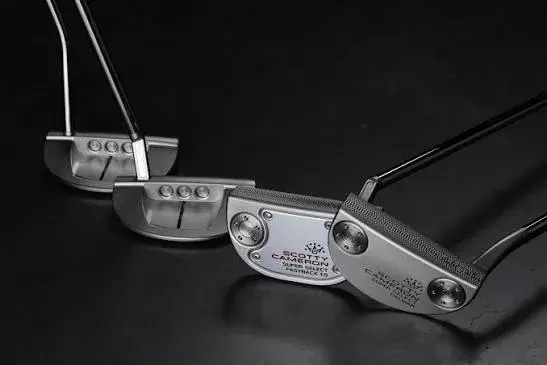
Mid-mallets sit between blades and full mallets.
They are useful if you like the feel of a blade but want a touch more stability. The head is usually larger than a blade but not as big as a Spider, Jailbird or DF3.
Examples include:
Scotty Cameron Fastback
Scotty Cameron Squareback
Odyssey Rossie
PING Anser D
Bettinardi Queen B wider-body shapes
For a lot of club golfers, this is the most sensible category to test. A full mallet might look too big. A blade might feel too unforgiving. A mid-mallet can be the compromise.
Forgiveness: Mallet Usually Wins
If forgiveness is your main issue, start with a mallet.
Mallets normally have more mass spread around the head. That helps the putter resist twisting when you miss the centre. On short putts, that can be important because a slightly open or closed face is enough to miss.
This is where high-MOI putters are useful. MOI stands for moment of inertia. In plain golf terms, it means resistance to twisting.
A higher-MOI putter will not fix a bad read or a poor stroke. But it can make a slightly poor strike less punishing.
If you often say “I pushed that” or “the face opened” after short putts, a mallet might help.
Feel: Blade Often Wins
If feel is your main priority, you may prefer a blade.
Blades usually give more feedback. You know quickly whether you hit the centre, heel or toe. Some golfers like that because it helps distance control.
This matters most on longer putts. If you feel detached from a large mallet head, your pace control can suffer. That does not mean mallets have poor feel. Plenty of modern mallets feel excellent. But some golfers still judge distance better with a smaller head.
If you are a good lag putter with a blade, do not change just because mallets are fashionable.
Alignment: Mallet Usually Helps More
Mallet putters often give you more help with aim.
Because the head is bigger, designers can add longer sight lines, contrast blocks, ball-width markings or framing shapes. Odyssey’s Versa alignment, TaylorMade’s True Path system and L.A.B. Golf’s unusual head shapes are all trying to solve the same problem: helping the golfer aim the face.
That can be massive for club golfers.
Many golfers do not aim where they think they aim. They miss putts before the stroke even starts. A putter that sits square and gives a clearer line can make an immediate difference.
If you struggle from 3 to 6 feet, test a mallet with strong alignment.
Distance Control: Test It Properly
Do not choose a putter based only on short putts in a shop.
A putter can feel brilliant from six feet and still be poor for you from 30 feet. Distance control is where a lot of fittings are won or lost.
When testing a blade vs mallet, hit:
Five putts from 4 feet
Five putts from 8 feet
Five putts from 20 feet
Five putts from 35 feet
A few breaking putts if possible
Do not only ask “did it go in?” Ask whether the ball started online and finished with sensible pace.
A good putter should help you hole short putts and leave long putts close.
Best Blade Putter Models to Try
If you want a blade putter, start with proven shapes.
Good blade models to look at include:
Scotty Cameron Newport
Scotty Cameron Newport 2
PING PLD Milled Anser
PING Anser
Odyssey Ai-ONE Milled One T
Odyssey Tri-Hot 5K One
Bettinardi BB1
Bettinardi BB8
Cleveland HB Soft Milled 1
Mizuno M.Craft OMOI 1
The Newport, Newport 2 and Anser-style heads are the obvious starting points because they show you what a traditional blade looks and feels like.
Best Mallet Putter Models to Try
If you want a mallet putter, there are loads of strong options.
Good mallet models to test include:
TaylorMade Spider Tour
TaylorMade Spider Tour X
Odyssey Ai-ONE Jailbird Mini
Odyssey #7
Odyssey 2-Ball
Scotty Cameron Phantom 5
Scotty Cameron Phantom 7
PING Tyne
PING Fetch
L.A.B. Golf DF3
L.A.B. Golf Mezz.1 Max
PXG Allan
The TaylorMade Spider and Odyssey Jailbird are strong places to start if you want tour-style mallet stability. L.A.B. Golf is worth testing if you are curious about zero-torque putting, but the shape can take some getting used to.
Which Is Better for Beginners?
Most beginners should at least test a mallet.
That does not mean every beginner should buy one. But if you are new to golf, you probably need help with alignment, strike and face stability. A mallet usually gives more help in those areas.
A good beginner putter should be:
Easy to aim
Comfortable from short range
Stable on mishits
Not too heavy to control
Simple enough to use without overthinking
If a blade looks better to your eye and you putt well with it, use the blade. Confidence matters. But for many new golfers, a mallet will be the easier starting point.
Which Is Better for Mid-Handicappers?
Mid-handicappers should choose based on their actual miss.
If you miss short putts because the face twists, try a mallet.
If you struggle with distance control and feel disconnected from a big head, try a blade or mid-mallet.
If you pull putts, push putts or aim badly, get fitted before assuming the head shape is the whole problem. Lie angle, length, grip size and toe hang can all affect how the putter sits and releases.
A lot of mid-handicap golfers would benefit from a proper putter fitting more than a random new model.
Should You Get Fitted for a Putter?
Yes, if you can.
Putter fitting is underrated. Golfers will obsess over driver shafts and then buy a putter because it looked good in the shop.
A fitting can check:
Putter length
Lie angle
Loft
Toe hang
Face balance
Grip size
Aim bias
Stroke path
Strike location
Pace control
This is where you find out whether you actually need a blade, mallet, mid-mallet, slant neck, plumber’s neck or double bend.
A useful video explainer is GOLFTEC’s putter style guide, which covers blade, mallet, high-MOI shapes, toe hang and face balance in a practical way.
Quick Decision Guide
Use a blade putter if:
You like a clean look
You want more feel
You strike the centre often
You prefer face rotation
You judge distance well with a smaller head
Alignment is not your main issue
Use a mallet putter if:
You want more forgiveness
You struggle to aim
You miss short putts from face twist
You like strong alignment aids
You prefer a stable head
You want more help on off-centre hits
Try a mid-mallet if:
A blade feels unforgiving
A full mallet looks too big
You want feel and stability together
You have a slight arc stroke
You want something more compact than a Spider or Jailbird
The Honest Answer
There is no universal winner between blade and mallet putters.
Blades are not only for good players. Mallets are not only for bad putters. Tour players use both because putting is personal and fit matters more than image.
If you want the safest answer, most golfers should start by testing a mallet or mid-mallet. The extra forgiveness and alignment help are useful, especially if you are missing short putts or struggling to aim.
But if a blade gives you better pace, better confidence and a cleaner strike, do not talk yourself out of it.
The right putter is the one that makes your bad putts better and your good putts repeatable.


No comments are on this article yet.